Jelly Dream: A Juicy Display Font That Makes Your Brand Irresistible
Two weeks ago, I was reworking the labels for a small-batch candle brand I consult for—hand-poured soy candles with names like “Vanilla Cloud” and “Salt & Sage.” The old labels used a generic rounded sans serif. Nothing was *wrong* with it—but customers kept saying the packaging felt “nice, but forgettable.” So we swapped in Jelly Dream, and suddenly, the jars looked like something you’d pause to photograph before lighting. Not because it’s flashy, but because it feels deliberate, joyful, and undeniably human.
What Jelly Dream Actually Feels Like (Not Just What It Looks Like)
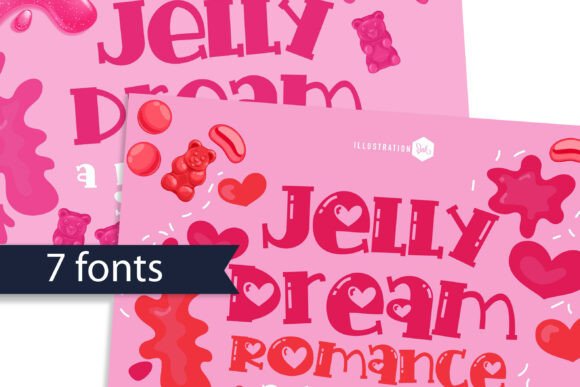
Jelly Dream is a premium display font—not a workhorse text face, but a personality-packed typeface built for moments that need to land. Think of it as your brand’s smile: thick, glossy, softly rounded, with subtle heart-shaped terminals and delicate highlights that catch the light like real jelly. It’s not cute in a childish way—it’s playful with intention. Warm, generous, and just a little indulgent. That “juicy” quality isn’t just marketing speak; it shows up on printed stickers, web banners, and even tiny product tags when scaled thoughtfully.
As a creative consultant, I’ve seen how much small businesses underestimate the emotional weight of typography. A font choice silently tells people whether you’re approachable or austere, handmade or mass-produced, nostalgic or forward-looking. Jelly Dream leans into soft confidence—ideal for brands rooted in care, craft, or comfort: bakeries, skincare lines, indie stationery shops, wellness coaches, or ceramic studios.
Where It Shines (and Where to Use It Wisely)
Jelly Dream works best where attention is short and impact is essential: logo lockups, product names on jars or boxes, social media headers, menu titles, thank-you card accents, and Instagram story templates. On a bakery’s kraft paper box? It makes “Lemon Lavender Loaf” feel like a treat you want to hold longer. On a skincare label? Paired with clean sans serif body text, it gives “Hydrating Jelly Serum” instant texture and trust.
But here’s what I tell every client: Jelly Dream is a spotlight—not the whole stage. Its boldness and decorative details mean it’s not ideal for long paragraphs, ingredient lists, or fine print on packaging. For those, pair it with a friendly, highly legible sans serif (like Poppins, Inter, or Montserrat) or an elegant, low-contrast serif (think Playfair Display or Cormorant Garamond). The contrast does the work: Jelly Dream brings charm and memorability; the supporting font delivers clarity and calm.
We tested it across formats: printed on matte sticker stock (holds detail beautifully), screen-printed on cotton tote bags (retains shape at 24pt+), and rendered on mobile Instagram ads (clear and eye-catching at headline size). At under 18pt on small product tags, readability dips slightly—so reserve it for primary names or logos, not secondary descriptors. For digital use, always preview on both iOS and Android thumbnails to confirm spacing and weight hold up.
Real Business Uses That Just *Work*
- Café menus: Used for drink categories (“Cold Brew Bar,” “Seasonal Sips”) above clean body copy—makes ordering feel lighter and more inviting.
- Handmade soap labels: Paired with a thin serif for scent notes—Jelly Dream becomes the “hero name” (e.g., “Honey Oat Glow”) while the rest stays readable and grounded.
- Online shop banners: On Etsy or Shopify, it adds instant warmth to seasonal promotions (“Summer Drop Live!”) without needing illustrations.
- Thank-you cards: Printed on textured paper, its glossy highlights translate as subtle sheen—making a simple “Thanks for choosing us!” feel personal and polished.
- Instagram templates: Works especially well for quote graphics or limited-edition launch announcements—its bounce and rhythm stop the scroll.
Before You Install: A Quick Licensing & Technical Check
Jelly Dream is a commercial font, so double-check the license covers your use case—especially if you’re embedding it in client deliverables, digital templates for sale, or physical products like mugs or apparel. Most reputable sellers include OTF and WOFF files, basic multilingual support (Latin-based languages), and stylistic alternates (like extra-bouncy capitals or alternate heart terminals). No ligatures or extensive language extensions—but that’s fine for most small business needs. If you’re using it for a logo, export as outlines in your design software to avoid font dependency later.
And one last note: fonts don’t fix inconsistent branding—but Jelly Dream makes consistency *easier*. When your product name, social headline, and shop banner all share that same joyful weight and rhythm, customers start recognizing your voice before they even read the words. That’s not magic. It’s thoughtful typography, applied with care.
So if your brand has heart—and you want that heart to show up, clearly and warmly, in every customer touchpoint—Jelly Dream isn’t just another display font. It’s the kind of small, intentional upgrade that makes people say, “Wait—what *is* that? I love it.” And then remember you.